The Climate Journalism Bubble

10 09 2025

By Dennis Meredith

By ignoring fundamental realities, climate journalists downplay the extreme peril of climate change.

Even as climate-driven heat waves, floods, and wildfires increase, Americans’ concern about climate change has not risen, according to a Gallup poll. True, 61 percent of respondents said they worried about climate change “a great deal” or “a fair amount.” But it’s about the same percentage as in polls dating back to 1989. It’s certainly not the level of concern, even alarm, required to drive the economic, political, and technological revolutions required to stave off a climate catastrophe. And, while a global survey found that 89 percent of respondents favor more government action to fight global warming, it has not translated into the dramatic action required.

Some of that lack of progress is likely due to the fact that people see climate-driven events as “natural disasters,” and carbon dioxide emissions as a usual, human-driven process. Imagine instead if aliens landed on Earth and began spewing carbon dioxide into the atmosphere at the rate of human-caused emissions. There would no doubt be a military response.

However, I contend that climate journalists are responsible for some of this lack of a sense of urgency. They have sequestered their reporting in an information bubble that excludes alarming realities that would reveal the extreme peril of climate change. Thus, they have downplayed the climate emergency.

Conveying a sense of urgency is particularly important now, given the Trump administration’s endemic climate change denialism. It has issued inaccurate climate change reports, and taken actions to obscure the reality of climate change including refusing to publish a major climate assessment and seeking to end the Environmental Protection Agency’s ability to regulate greenhouse gas emissions. Here are some of the stark realities often excluded from the climate journalism bubble.

Carbon dioxide emission levels are meaningless. Whether carbon dioxide emissions go up or down, atmospheric carbon dioxide levels will continue a relentless rise because of the hellishly long atmospheric lifetime, measured in centuries, of emitted carbon dioxide. The complexity of carbon dioxide processing in the environment means that millennia will pass before the carbon dioxide emitted today will be thoroughly absorbed. So, articles reporting carbon dioxide emission levels should include that reduced emissions will not cause reduced atmospheric concentrations.

Global temperatures will rise inexorably. Given that fossil fuel production will continue unabated, carbon dioxide levels will continue to rise, and so will global temperatures. Articles reporting new global temperature levels should include this context to accurately reflect the dire nature of the climate emergency.

Global temperature limits are a scientists’ con. The 1.5 degree C temperature limit set by scientists as a goal is naïve at best, perhaps even disingenuous. For one thing, no single number could possibly convey the immense complexity of climate change and its hazards. What’s more, scientists basically pulled the number out of their . . . hat. The original 2 degrees C limit scientists proposed arose not from an analysis of scientific data, but was merely the global temperature rise believed to occur if atmospheric carbon dioxide level doubled. And the 1.5 degree C limit was decided on only because scientists believed it was less damaging than a 2 degrees C increase. It is telling that they chose 1.5 degrees, rather than 1.4 degrees, or 1.6 degrees, or some other number that would indicate scientific rigor. Despite this lack of validity, scientists continue to promulgate the 1.5-degree limit, and journalists continue to uncritically cite it, e.g. this article.

U.S. climate policy is globally all-but-irrelevant. U.S. climate journalists understandably center their reporting on U.S. climate policy, but invariably without global context. In reality, U.S. climate policy has almost no global implications. For one thing, regardless of any U.S. policy change, it is only one country and a relatively minor contributor to global greenhouse gas emissions. In 2024, the top emitters were China (32%), United States (13%), India (8%), EU (7%), Russia (4%), and Japan (3%), according to the Global Carbon Budget. And, according to the UN, the world is failing to reduce greenhouse gas emissions enough to avoid a major temperature increase.

Fossil fuel companies are not villains. They are rattlesnakes. While corporations comprise people who possess a moral compass, the corporation as an economic entity does not. The corporation is less like an individual human and more like a rattlesnake. Both serve a useful purpose—in the case of rattlesnakes, controlling pest populations—and both are laser-focused on survival. One would not expect a rattlesnake to have a conscience; nor should one expect a corporation to. Corporations readily commit unethical acts to survive and profit. While journalists should certainly report such acts, their practice of simplistic, knee-jerk demonizing of corporations avoids a critical and profoundly disturbing question: Why are fossil fuel companies so successful? It’s because they provide the energy that underpins the global economy. Even as climate journalists inveigh against the perfidy of fossil fuel corporations, their lives are made possible by the food, shelter, transportation, and other necessities fossil fuels provide.

Renewable energy won’t replace fossil fuels. The oft-cited statistic that the vast majority of new electricity generation comes from renewables is misleading. First of all, additions to generation capacity do not mean significant replacement of the massive existing capacity, which is overwhelmingly fossil-fuel-powered. Also, electricity production meets only one component of energy demand. A huge portion is fossil-fueled, such as industrial processes. As of 2022, the share of the global energy supply of solar, wind, hydro, geothermal and ocean energy was only 5.5 percent, and renewable energy is not rising enough to even come close to replacing the massive consumption of fossil fuels and its huge production infrastructure and production plans. And, despite renewable energy’s seeming economic advantages, its increase must overcome logistical and political barriers, as well as industry’s reluctance to abandon massive investment in fossil-fuel-based equipment.

Experimental climate-saving technology are not “promising”. Journalists may dub promising experimental climate-related technologies such as carbon capture and renewable energy. However, laboratory success is far, far from marketplace success. Experimental technologies must overcome massive economic and technological hurdles, and most end up in the developmental Valley of Death. So, prematurely calling them promising amounts to optimistic hype.

Climate journalists ensconce themselves in a coverage bubble because of both personal and editorial exigencies. Like all of us, they have an anxiety-reducing “optimism bias,” in which they overestimate the likelihood of positive events and underestimate the likelihood of negative events. They may also experience “apocalyptic blindness”—a concept proposed by philosopher Günther Anders in which we are unable to imagine the end of our history. Journalists must also defer to editors who declare that distressing apocalypse-tinged stories do not sell—an irony, given that fictional apocalyptic tales are highly popular. And while editors may brand bluntly realistic reporting as alarmist, when the future is, indeed, alarming, the label is entirely apt.

Journalists should free themselves from their coverage bubble. To be accurate and complete, their reporting on the climate emergency must include its uncomfortable, even frightening truths. As journalist Katarina Zimmer wrote in Undark, “… climate communication should not just be about instilling hope. It means also confronting the worst possible outcomes and the tough, transformative work that lies ahead.”



What’s Missing From the Chimp Rights Case: Chimp “Testimony”

22 04 2015

A new ruling by a judge in the New York Supreme Court has opened the way for legal arguments about whether chimpanzees should have “legal personhood.” To be clear, legal personhood doesn’t mean that chimps would be voting or having coffee at the local Starbuck’s, but that they would have the right to a fulfilling life in a humane environment, just as do people. (See this essay by Natalie Prosin for an excellent discussion of the issue.)

Nonhuman Rights Project logoAnd the ruling only ordered a hearing “to show cause,” not that the court was addressing the issue of whether the chimps had a right to a writ of habeas corpus.

The case brought by the Nonhuman Rights Project will be argued on both legal and scientific grounds. But I’m sure the hearing will not include “testimony” from the very creatures at the center of the controversy.

Obviously, I do not mean testimony in the sense of a chimp taking the stand, swearing on the Bible, and giving evidence. Rather, I believe that the case could be greatly informed by chimpanzees’ own spontaneous behavior—first-hand observations that go to the very heart of the case for legal personhood. I would argue that such behavior constitutes “testimony,” in that it portrays truths regarding chimpanzees that should be relevant in a court of law.

As examples, I offer my observations of chimp behavior during research for my novel Solomon’s Freedom, a fictional account of a court case seeking legal personhood for a chimpanzee. (Note: Steven Wise, president of the Nonhuman Rights Project, advised on the book.)

To research the novel, my wife Joni and I spent several weeks in The Ohio State University Chimpanzee Center, watching the chimps involved in numerical cognition research by psychologist Sally Boysen.

Negotiating a paycheck

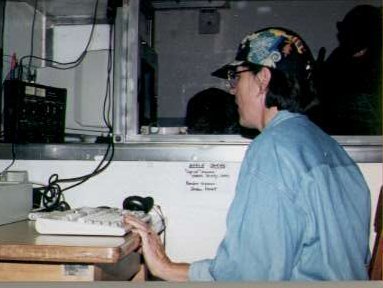
In a typical research session, a chimp would take his (or her) place on a platform on the other side of a Plexiglas boysen5window from Sally or another researcher. In front of the chimp would be a touch screen, and Sally would present number problems requiring the chimp to pick the right answer by touching the screen. For a correct answer, the chimp would get a candy that Sally inserted through a small hole in the window.

Working for a reward is not unusual in such studies. But what I thought was most telling was the “negotiation” that followed the research session.

At the end of the session would come a “payday,” in which Sally would take a paper bag over to a cabinet in sight of the chimp and proceed to put more goodies into the bag for the chimp. But the chimp was no chump. Sally would drop a few treats into the bag, and if the chimp didn’t think the pay was sufficient, he would give a decided negative shake of the head. So, Sally would add a few more goodies. Only when the chimp decided the “pay” was sufficient would he deem it acceptable with a nod of the head.

Browsing a magazine

Then there was the “magazine incident.” One day, I was standing near one of the chimps’ outdoor cages, and he emerged carrying a magazine. He proceeded to lie on his back, prop up one foot on his knee and leaf through the magazine, uttering appreciative grunts. Was he actually looking at a magazine, or only mimicking something he’d seen humans do?

Sally said that chimps did, indeed, like to look at the pictures in magazines, and did seem to recognize them as images of real objects.

In fact, Sally’s experiments demonstrated more rigorously that chimps can grasp abstractions. In one study, the researchers hid a toy Coke can in a model of the chimps’ playroom. They then released the chimp into the real playroom, and the chimp was, in many cases, able to immediately retrieve the Coke from its hiding place.

While most portrayals of chimps show them as violently screaming or passively munching food or lounging, we did see instances of the same kind of curiosity that humans display.

For example, one day Joni was planting flowers outside one of the outdoor cages, when a chimp approached, sat down and proceeded to quietly watch her at her work. She explained to the chimp what she was doing, and the chimp would periodically amble off and return to resume watching. After a while, Joni became intent on her gardening, no longer talking to the chimp. The chimp went away and shortly returned.

He then launched a mouthful of water across a distance of several feet into Joni’s face. Whether it was a demand for attention, a joke, or an aggressive act, it was clearly a strategic act of communication by a deliberative creature.

Getting darted

However, perhaps the most telling bit of “testimony” about chimp behavior relevant to legal personhood was the episode I witnessed of the chimp Bobby being tranquilized. Bobby had developed a cough, and the researchers wanted to make sure it wasn’t pneumonia. So, he had to be anesthetized with a tranquilizer dart gun, to be given a chest x-ray and health exam.

When Sally approached the cages with the dart gun, an enormous uproar rose among the chimps. According to Sally, it was the standard panicked response, because the chimps knew that one of them was about to be darted.

She approached a nervous Bobby and said, “Now, I’m going to have to dart you, so show me your rump.” It was important for Bobby to present his rump, so the dart would safely hit a fleshy part of his body.

Bobby complied, turning his rump toward Sally. She fired. The dart bounced off Bobby’s thick hide.

“Bring me the dart,” she instructed.

Bobby brought her the dart and once again turned his rump to her. She reloaded and fired again. This dart embedded itself into Bobby’s thigh.

“Now pull out the dart and bring it to me,” Sally instructed. Bobby obeyed.

“Now you’re going to go to sleep, so lay down,” she said. This command was important so that Bobby wouldn’t climb to a place where falling would injure him, Bobby laid down and was soon unconscious.

Such “testimony” revealing such evocative behaviors will not likely find its way into court proceedings to decide whether chimpanzees deserve legal personhood.

But it should.

(Notes: See this list of resources for further background on chimpanzee research and the case for legal personhood. Dr. Boysen’s laboratory was closed by the university in 2006.)


“Wormholes” Author is a Liar and Thief. . . But Says It’s O.K.

27 09 2013

As the author of the new sci-fi adventure novel Wormholes, I’m a liar and a thief. I’ll explain why, and the reasons I think it’s O.K.

Some background: The idea for the novel had its beginning years ago in a simpleWormholes cover question “What if holes were to suddenly open up into other universes?” As is perhaps the case with most novelists, from that seed of an idea, I began to build a story. And in the process, I invented all kinds of physics. That’s when I became a liar.

I had to invent a scientific-sounding explanation of why, in its travels through the galaxy, our solar system enters a region of lurking wrinkles in spacetime. These wrinkles, I fabricated, constitute weaknesses in the spacetime fabric that cause holes to seemingly arbitrarily open up from our universe into other universes. So on Earth and on other planets, holes suddenly appear that might intrude into other universes’ interstellar space, into the fiery centers of stars, or onto the surfaces of alien planets. To drive my fictional story, I also invented some exotic physical properties for these “transdimensional apertures” that enabled me to plunge my characters into all kinds of perilous adventures. (I won’t reveal details, because that would give away the plot, and I’d like readers to be surprised.)

I was a bald-faced liar because my physics was all scientific poppycock.

Then I became a thief. I misappropriated the term wormholes to name these apertures, because it was popular and would attract readers. Again, it was poppycock, because scientifically, my “wormholes” are nothing like the theoretical wormholes of real astrophysics.

So, why should I care that I was propagating poppycock? After all, other sci-fi authors devise scientifically ridiculous stuff all the time, from Star Trek to Dr. Who. And sci-fi fans are perfectly willing—like the Queen in Through the Looking Glass—to believe six impossible things before breakfast.

However, I felt guilty because in my profession  as a science communicator, for decades I tried to write accurately about real astronomy and astrophysics, working at three of the country’s top universities in the field—Caltech, MIT, and Cornell. Was I betraying my own principles, and incurring the scorn of scientists whom I greatly respect?

Fortunately, I’ve been able to bury that nagging guilt beneath some pretty substantive—and I think interesting—rationales.

Wormholes sources 2 (300x276)For one thing, I wanted to grab readers and lure them into exploring real science, just as I was captivated as a boy by the imaginative writings of legendary science fiction writers Isaac Asimov, Robert Heinlein, Ray Bradbury and Arthur C. Clarke. Their books, which launched flights of fictional fancy from real science, inspired me to want to know more about science, and ultimately to write about it. To give readers a path to that science, I even added a this list of sources of real science and engineering that inspired the book to the Wormholes web site.

My lying and thievery was also justified because I sought in the novel to reveal some greater truths about science and scientists.

For one thing, they’re an incredibly courageous and indefatigable lot. Few lay people realize that the vast majority of scientific experiments are failures. Scientists only advertise their successes, in scientific journal articles and news releases. But despite failure after failure, scientists persist, laboring away until they achieve success. And so, in Wormholes, my characters—including intrepid geologist Dacey Livingstone and iconoclastic physicist Gerald Meier—suffer failures that are sometimes deadly, resolutely learning from each failure and trying again.

The novel also portrays another greater truth—that scientists have been censured and censored for their theories, even in the face of good evidence. Among the most notorious modern examples is the censorship of climatologist James Hansen for his assertions that global warming is caused by human activities like burning fossil fuels.

I also experienced censorship in my career as a public information officer, which is a particular reason I wanted to portray it in the novel. At Caltech for example, in 1983 the administration killed a news release I’d written about economist Roger Noll. He had analyzed the organizational structure of large government R&D programs, including the then-new Space Shuttle. He declared the Shuttle program a “catastrophe,” because it rushed headlong into a massive construction program without carefully evolving the technology over multiple generations. Roger Noll’s criticisms were borne out by the Shuttle’s massive cost overruns, under-performance, and of course the subsequent, tragic Challenger and Columbia disasters. When my release was killed, I suspected it had to do with Caltech’s ties with NASA, via its Jet Propulsion Laboratory. But I thought maybe the administration knew something I didn’t about Noll or the Shuttle program.

Another egregious example: At Caltech, I’d written a news release about a paper by geochemist Clair Patterson on the health hazards of global lead pollution. The head of his Caltech division killed that release, even though Patterson’s evidence was solid and widely accepted. At the time, I believed that the censorship was due to some scientific issue I wasn’t aware of. Today I believe it might well have been fear of offending the powerful oil industry. Patterson’s advocacy ultimately led to a removal of lead from gasoline and other products.

So, perhaps I am a liar and a thief. But I can live with it, because not only have I tried to spin an entertaining sci-fi adventure tale. I’ve also tried to inspire readers to explore real science, and given them some real insight into scientists and their quests for discovery.


Presidential Politics Neglecting Science: Seeing a Silver Lining

14 10 2012

As the presidential candidates and their surrogates pound away at each other in the final weeks of the campaign, science is almost never mentioned. The candidates only rarely cover such critical issues as global warming and biomedical research funding, aside from the highly commendable effort by Science Debate 2012 to elicit answers from the candidates to key science-related questions (must reading for any voter).  This Science article contains a good analysis of the candidates’ positions (subscription required).

While many see this neglect as something of a dark cloud looming over science—a view with which I certainly agree—I also see a silver lining that should be taken into account, and in fact taken advantage of.

Obviously, the candidates don’t spend much time talking about science and technology because there’s more vote-getting mileage in haranguing each other about the economy, health care and slips-of-their-silver-tongues.

But another major reason for their relative silence on science is that science and technology constitute Mom-and-apple-pie issues. The public likes and respects science and scientists. As NSF’s Science and Engineering Indicators has consistently shown, the public strongly supports scientific research and has confidence in the scientific leadership. And public polls, such as this Harris Poll and this one consistently rank scientists as among the most prestigious and trusted professionals. So, scientists and science supporters shouldn’t worry so much about the paucity of science discussion by the candidates during the election.

But we should worry very very deeply about what happens to science budgets and science-related issues after the election. For example, this report from the AAAS highlights the damage that sequestration could do to R&D budgets.

After the election is the time to take advantage of the silver lining—the public’s support and respect  for science and scientists—to launch a concerted campaign not only to support science and technology budgets, but to advocate for rational science policy on such critical issues as global warming.

Fortunately, there is a legion of science advocacy groups that can help any scientist willing to invest in such a communication effort. (See this list from the Explaining Research references and resources.)

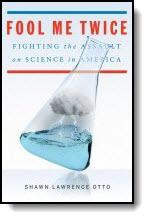
Scientists can also educate themselves about the history and nature of the political neglect of science by reading Shawn Lawrence Otto’s articulate and compelling book Fool me Twice: Fighting the Assault on Science in America (Rodale, 2011). Otto is co-founder and CEO of Science Debate.

Otto argues persuasively that scientists must see themselves as a force for political good:

Wishing to sidestep the painful moral and ethical parsing that their discoveries sometimes compel, many scientists today see their role to be the creation of knowledge and believe they should leave the moral, ethical, and political implications to others to sort out. But the practice of science itself cannot possibly be apolitical because it takes nothing on faith.

Otto declares that because of science’s relentless reliance on experiment and data, “science is inherently antiauthoritarian and a great equalizer of political power.”

Certainly, scientists would prefer to spend their time doing research, which is more fun than testifying before congressional committees or buttonholing legislators. But choosing not to invest time in advocacy means yielding the political arena to what New York Times reporter Timothy Egan has dubbed The Crackpot Caucus. As Egan so pithily puts it

On matters of basic science and peer-reviewed knowledge, from evolution to climate change to elementary fiscal math, many Republicans in power cling to a level of ignorance that would get their ears boxed even in a medieval classroom. Congress incubates and insulates these knuckle-draggers.

And this ignorance is not just evident in a general sampling of  legislators, but in the members of the House Science Committee itself, as detailed in this Wired Science article by Brandon Keim, “Todd Akin and the Anti-Science House Science Committee.” Writes Keim of Akin,

. . . a man who, to put it gently, ignores what science tells us about how babies are made, helps shape the future of science in America. It would be shocking, but for the fact that many of the committee’s GOP members have spent the last several years displaying comparable contempt for climate science.

Ironically, scientists have a far greater level of public support and respect than does  the Congress that decides the fate of their research budget. Not to use that “silver lining” to its fullest extent risks damaging not only scientific careers and scientific research, but the very economic health and intellectual vitality of the nation.